
CASE STUDY · MANUFACTURING · POWER QUALITY
A plastic injection moulding plant stopped paying for the peaks its own presses created.
A plastic injection moulding factory was paying for its own load profile. Dozens of high-power presses running on uncoordinated cycle times created load swings of hundreds of kilowatts in under 100 milliseconds, far faster than the site's on-site solar and gas generation could respond. Voltage drops stopped production, and demand charges were set by the worst spike the grid recorded each month.
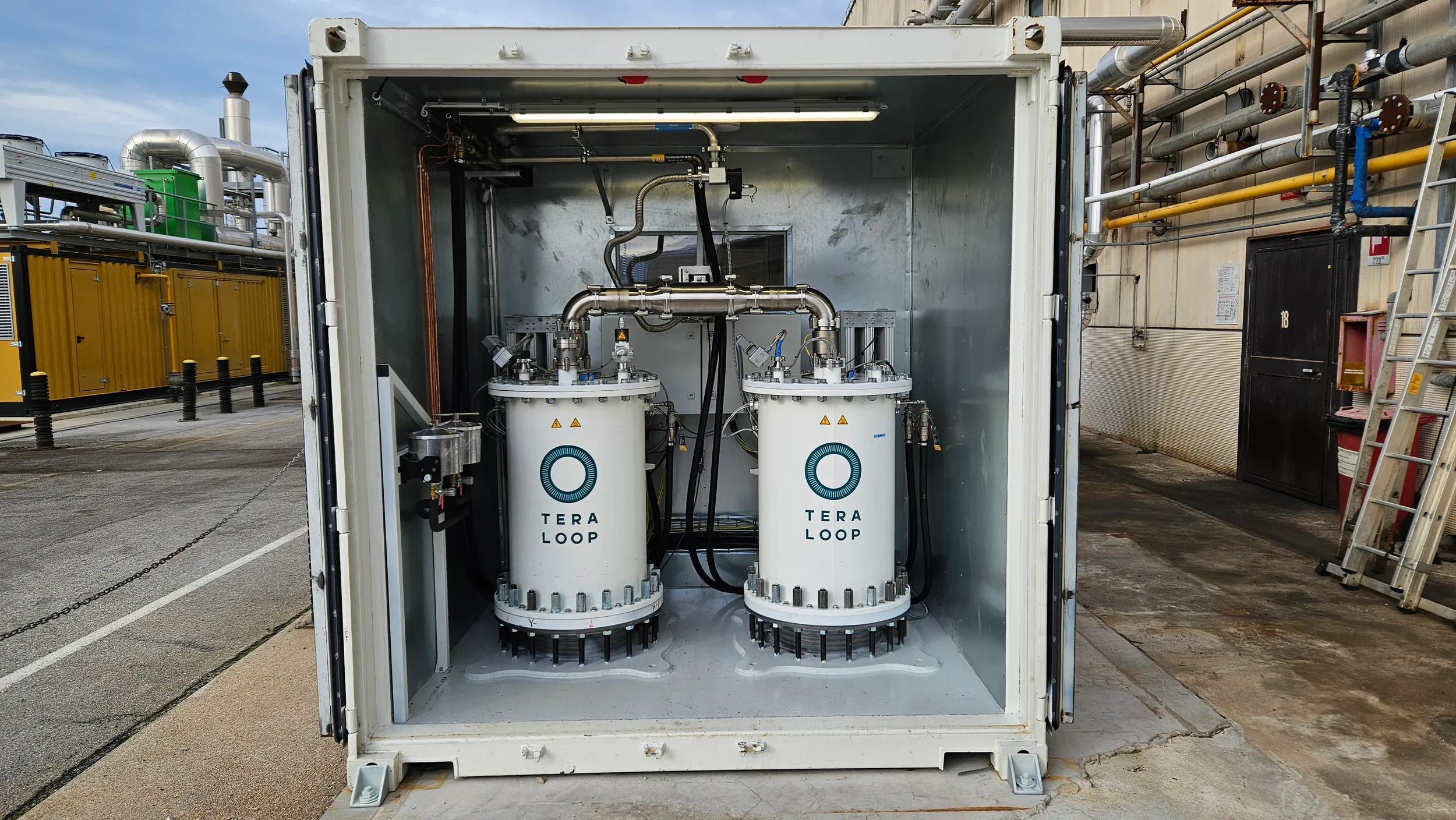
Teraloop installed a 500 kW PowerLoop 250 containerised flywheel at the site in December 2023, in the footprint where a gas generator used to sit. It runs three jobs in parallel: shaving peaks before the meter sees them, shifting on-site solar and gas energy to high-demand moments, and supporting voltage in under 10 milliseconds when the grid sags. After two years of operation, the system delivers more than €80,000 per year in direct savings.
INSIDE THE FULL CASE STUDY
Why a plastics plant's load profile defeats normal generators
How load shifting, peak shaving, and voltage support run in parallel, with voltage as top priority
The single-line diagram and where the flywheel sits behind the meter
Measured peak-shaving impact and voltage-event response data
The financial breakdown: €80k+ delivered today, €100k+ potential as operations scale